> For the complete documentation index, see [llms.txt](https://docs.gotproof.xyz/llms.txt). Markdown versions of documentation pages are available by appending `.md` to page URLs; this page is available as [Markdown](https://docs.gotproof.xyz/core-capabilities.md).
# Core Capabilities
This page defines **what $PROOF does** and **what gets anchored on-chain**.
You can read it as:
* **Integrator view**: inputs/outputs + where to plug in.
* **Auditor view**: what to fetch from chain + what to validate.
### Capability map (3 domains)
* **Spend Verification**: subscriptions, invoices, payroll lines, high-volume payouts.
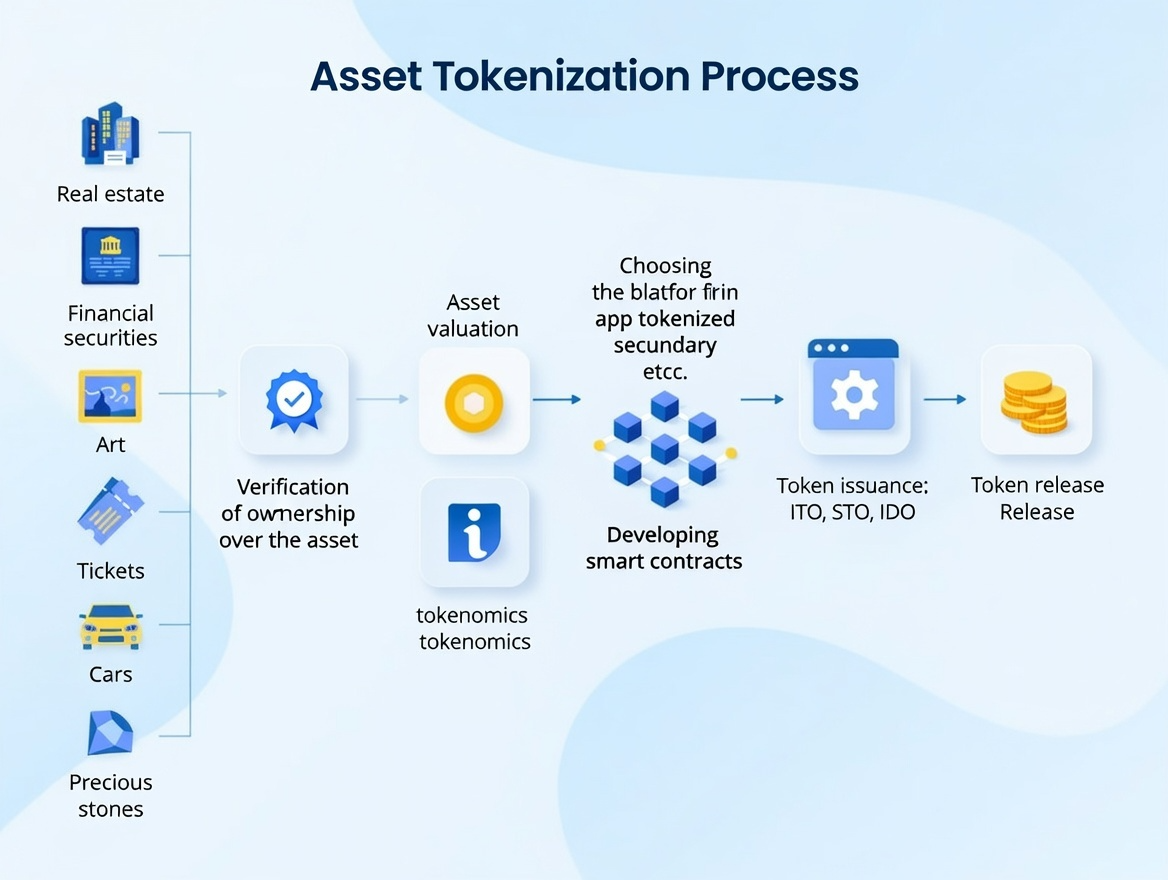
* **Asset Ownership**: tokenize + track ownership and transfers (RWA or on-chain assets).
* **CAPEX Management**: treasury ops, proof-of-reserves, on-chain disbursement controls.
{% hint style="info" %}
All three domains rely on the same idea: **off-chain context** becomes **tamper-evident** via an **on-chain anchor** (signature + commitment hash).
{% endhint %}
### Shared primitives (used everywhere)
#### 1) On-chain anchor
At minimum, a verification should reference:
* **Network** (Solana-first)
* **Transaction signature** (canonical pointer)
* **Commitment** (hash or Merkle root that binds metadata)
#### 2) Minimal record shape (illustrative)
Use this shape in your own systems. Treat it as a *contract you control*.
{% code title="verification-record.json" %}
```json
{
"network": "solana",
"txSignature": "",
"commitment": {
"type": "sha256",
"value": ""
},
"subject": {
"type": "payment | ownership | reserves",
"id": ""
},
"amount": {
"asset": "USDC",
"quantity": "1250.00"
},
"fiat": {
"currency": "USD",
"amount": "1250.00"
},
"timestamp": "2026-01-22T17:20:12Z",
"metadata": {
"uri": "https://…/proof/",
"sha256": ""
}
}
```
{% endcode %}
{% hint style="warning" %}
If the commitment is a **Merkle root**, the verifier must also have the **leaf** and **Merkle proof path**.
{% endhint %}
***
### Spend Verification
**Goal:** turn a spend event into a **publicly auditable record**.
#### What it covers
* Subscriptions and recurring billing.
* High-volume payouts (creators, vendors, payroll lines).
* Enterprise expense batches (AP runs, reimbursements).
#### Inputs (typical)
* `payer` / `payee` identifiers (wallet, account, or platform handle)
* `amount` + `asset` (+ optional fiat conversion context)
* platform reference IDs (invoice ID, payout ID, receipt ID)
* metadata blob (receipt bundle, line items, memo, policy tags)
#### On-chain artifacts (auditor view)
* **Transaction signature** that anchors the verification.
* **Commitment** to the metadata (hash or Merkle root).
* Optional: program logs / accounts, if a dedicated program is used.
Batching model (why Merkle roots show up)
Batching reduces fees and improves throughput.
* Each spend item becomes a **leaf hash**.
* The batch anchor stores or references a **Merkle root**.
* A verifier checks membership with a Merkle proof.
#### Example: batch commitment (illustrative)
{% code title="batch-commitment.json" %}
```json
{
"batchId": "ap-run-2026-01-22",
"merkleRoot": "9c2a…f31b",
"items": 24847,
"total": { "asset": "USDC", "quantity": "2400000.00" }
}
```
{% endcode %}
#### Verify the anchor exists (Solana RPC)
{% code title="getSignatureStatuses (cURL)" %}
```bash
curl https://api.mainnet-beta.solana.com \
-H "Content-Type: application/json" \
-d '{
"jsonrpc":"2.0",
"id":1,
"method":"getSignatureStatuses",
"params":[[""], {"searchTransactionHistory": true}]
}'
```
{% endcode %}
{% hint style="success" %}
**Pass condition:** signature is found and `confirmationStatus` is `finalized` (or your policy threshold).
{% endhint %}
***
### Asset Ownership
**Goal:** represent assets with **verifiable ownership state**, then make transfers auditable.
#### What it covers
* Asset tokenization (RWA or on-chain-native assets).
* Ownership proofs tied to a mint / registry primitive.
* Distributions (airdrops, dividends, allocations) with verifiable recipients.
#### On-chain artifacts (auditor view)
Depending on implementation, you’ll typically reference:
* **Mint address / asset ID** (token mint, registry address, or program state).
* **Current owner or custody account** (token account / PDA / multisig).
* **Transfer signatures** for ownership changes.
* **Metadata commitment** (hash) that binds off-chain legal/asset docs.
Example asset ownership / tokenization flow (illustrative).
#### Example: ownership proof record (illustrative)
{% code title="ownership-proof.json" %}
```json
{
"assetId": "",
"owner": "",
"txSignature": "",
"commitment": { "type": "sha256", "value": "b3f1…" },
"metadata": {
"schema": "rwa-v1",
"sha256": "2a9d…",
"uri": "https://…/asset/"
}
}
```
{% endcode %}
#### Fetch a transaction and ensure it succeeded (Node.js)
{% code title="verify-ownership-anchor.ts" %}
```ts
import { Connection, clusterApiUrl } from "@solana/web3.js";
const connection = new Connection(clusterApiUrl("mainnet-beta"), "confirmed");
export async function verifyAnchor(signature: string) {
const tx = await connection.getParsedTransaction(signature, {
maxSupportedTransactionVersion: 0
});
if (!tx) throw new Error("Transaction not found (or pruned).");
if (tx.meta?.err) throw new Error(`Transaction failed: ${JSON.stringify(tx.meta.err)}`);
return {
slot: tx.slot,
blockTime: tx.blockTime,
instructions: tx.transaction.message.instructions.length
};
}
```
{% endcode %}
{% hint style="warning" %}
Ownership verification usually requires **program-specific decoding** (mint state, PDAs, metadata). Add those checks once the program IDs and account layouts are published.
{% endhint %}
***
### CAPEX Management (treasury + reserves)
**Goal:** make treasury operations **verifiable** and reserves **provable**.
#### What it covers
* Stablecoin payroll and vendor payouts.
* Treasury holdings verification (balances + movement history).
* Proof-of-reserves style attestations (balance snapshots + commitments).
#### On-chain artifacts (auditor view)
* Treasury wallet(s) or custody accounts.
* Token accounts holding reserves (`USDC`, etc.).
* Payout transaction signatures for disbursements.
* Snapshot commitments (hash of balances + time) for PoR-style proofs.
#### Example: reserve snapshot commitment (illustrative)
{% code title="reserve-snapshot.json" %}
```json
{
"snapshotTime": "2026-01-22T00:00:00Z",
"accounts": [
{ "tokenAccount": "", "asset": "USDC", "balance": "10400000.12" },
{ "tokenAccount": "", "asset": "USDC", "balance": "250000.00" }
],
"commitment": { "type": "sha256", "value": "7dd0…9a1c" },
"txSignature": ""
}
```
{% endcode %}
#### Verify a token account balance (Solana RPC)
{% code title="getTokenAccountBalance (cURL)" %}
```bash
curl https://api.mainnet-beta.solana.com \
-H "Content-Type: application/json" \
-d '{
"jsonrpc":"2.0",
"id":1,
"method":"getTokenAccountBalance",
"params":[""]
}'
```
{% endcode %}
{% hint style="info" %}
For strong PoR claims, document **which accounts** are in-scope and how custody works. “Proof” without scope is just a balance screenshot.
{% endhint %}
***
### What “backed by the $PROOF Protocol” means (operationally)
**Expectation:** a third party can independently verify:
* the **anchor exists** on-chain (signature is real)
* the **anchor is final** (confirmation policy)
* the **commitment matches** the referenced metadata (hash/Merkle validation)
* the **subject** (payment/ownership/reserves) is consistent with that metadata
.gif?alt=media&token=32c9eb01-1896-4a4c-9954-30ee1b1f2c94)
.gif?alt=media&token=af5cfe2f-bb48-428b-b03b-5a31752601ee)